
Restoring a Victorian Games Table: A Piece of Leisure History
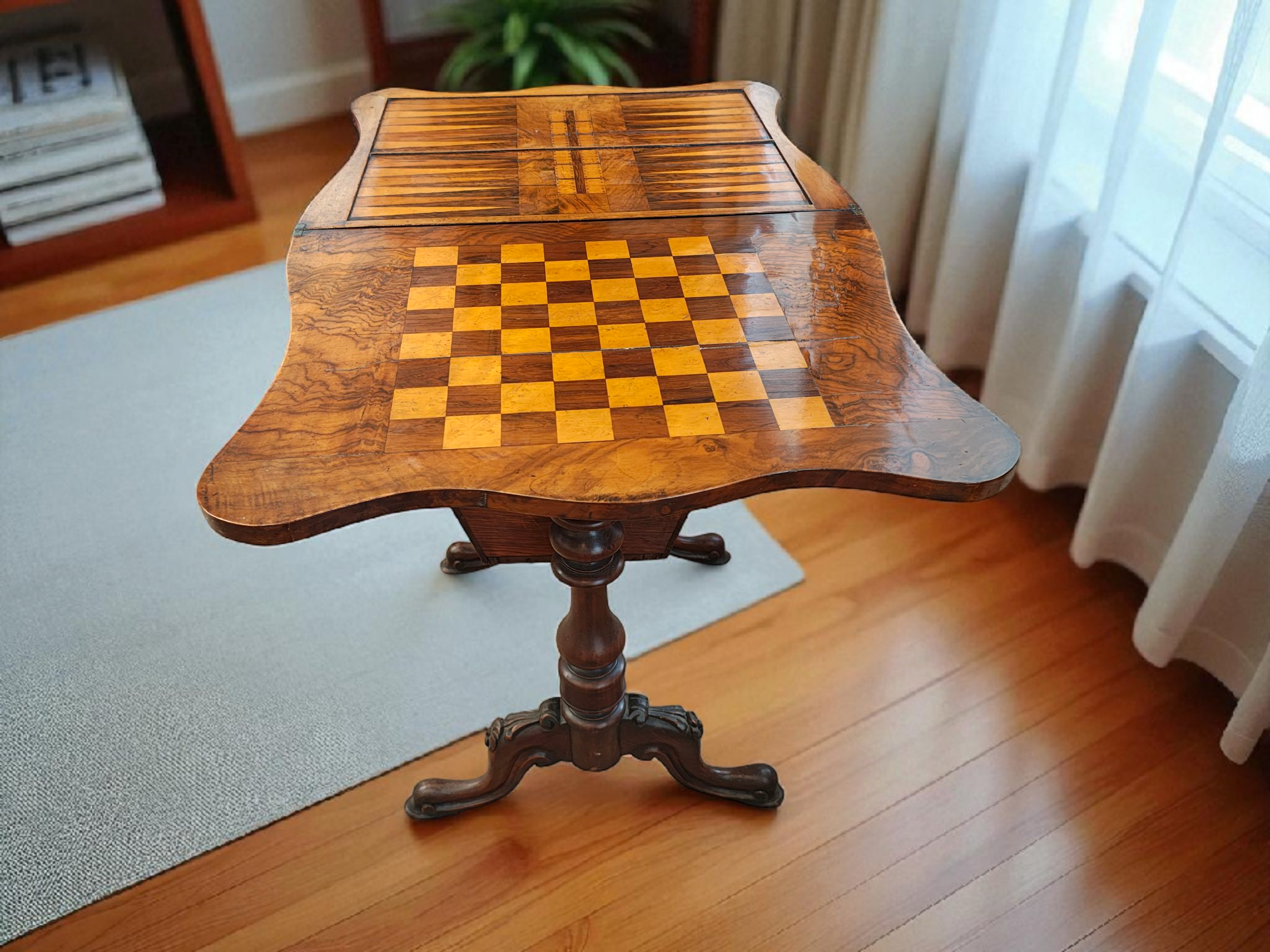
We recently had the pleasure of restoring a striking antique games table — a fine example of Victorian-era design that reflects the elegant traditions of parlour entertainment in the 19th century.
This piece most likely dates from the mid-to-late 19th century (circa 1850–1880). Games tables like this one were designed with multi-game surfaces, most commonly for chess, checkers, and backgammon.
Key Features and History
Multi-Game Surface
The chess/checkers board is made from contrasting inlaid woods such as maple and walnut or rosewood and satinwood.
A backgammon board is often hidden — either on the reverse side of a liftable panel or by flipping the top.
This clever dual-purpose design was especially popular among the wealthy middle and upper classes during the Victorian period.
Design Characteristics
The table features curved, serpentine edges typical of the Rococo Revival style.
Its pedestal base with carved feet suggests a high level of craftsmanship and is consistent with English or French furniture of the era.
The wood grain appears to be burled walnut, valued for its deep, swirling patterns.
Cultural Context
In Victorian times, having a dedicated games table was a mark of sophistication. These pieces were typically found in drawing rooms or parlours and used for leisure, conversation, and refined entertainment — an important part of life before digital technology.
Victorian society placed high value on:
- Domestic leisure
- Parlour games that promoted etiquette and engagement
- Beauty in functional design
Origin Possibilities
The design and craftsmanship suggest it likely originated in England.
Some features could indicate Continental European influence, particularly from France or Germany, where furniture often displayed more elaborate marquetry.
Materials Used
- Body: Burled walnut or mahogany
- Inlay: Satinwood, ebony, or boxwood
- Joinery: Hand-cut dovetails and turned pedestal, indicative of pre-industrial, handcrafted workmanship
We love seeing pieces like this come through the workshop, not only for the restoration challenge but for the story each piece tells.